Steven Boccone On Navigating Digital Trends

Steven Boccone has built his career in the fast-paced world of New York, right at the heart of cutting-edge marketing campaigns and surrounded by some of the sharpest minds in the business. Now leading GBX Digital as its CEO, Steve draws from the city’s endless pool of ideas and his strong network of pros to tackle digital marketing challenges.

After earning his stripes in accounting and economics from the University of Maryland at College Park, Steve’s journey took him through various high-stake finance roles. He worked for such big names as Morgan Stanley and Standard Chartered. Due to the 2008 Housing Crisis Steve shifted from Finance to Marketing. Taking a role as the CFO, COO and then Asian Country Manager of an early Online Marketing service provider who became a behemoth, SEOP.com & ReputationManagementConsultants.com. On top of that, he’s lent his expertise as a consultant, helping businesses nail their financial and marketing strategies.

At GBX Digital, Steve’s day-to-day involves teaching companies all about SEO, managing their online reputation, navigating PR crises, and mastering PPC and social media marketing, to name a few. While he’s got a special knack for the finance sector, Steve’s skills are versatile, covering industries from healthcare to online retail.

Steve’s approach? It’s all about diving deep into the data. With his financial eye, he looks at the numbers to help make smart decisions. He’s into analyzing customer trends, modeling predictions, and checking out campaign results to get a clear picture of what works. His goal is to help build teams that businesses can rely on as they step up their marketing game.

Besides his work in the US, Steve has also embraced a life in Asia, particularly the Philippines, contributing to various charitable projects and immersing himself in the local culture. His background as CMO, COO and CFO gives him a broad perspective on economic trends and business strategies.

In this Interview, we’ll get Steve’s take on the digital marketing world, drawing from his broad experience to share tips and insights for businesses looking to make their mark online.

Current Landscape of Digital Marketing

Q: Can you describe the current state of digital marketing and its impact on businesses today?

Steve: The digital marketing world is on a fast track, constantly evolving. Nowadays, it’s all about leveraging data to really nail what your customers are after. Personalization has moved beyond being a trendy term to a crucial differentiator for businesses. People expect everything, from emails to website experiences and online ads, to feel like it was crafted just for them.

Then there’s the whole arena of social media and influencer marketing, which have become the heart of engaging online. It’s less about just throwing content out there and more about sparking genuine conversations and forging authentic connections. Influencers have emerged as vital bridges between brands and their communities, offering a more relatable touch.

Digital marketing has become a lively, customer-centric battlefield. It’s about making the most of the insights at your disposal, connecting sincerely, and staying nimble in your approach.

Q: What digital marketing trends have you observed gaining momentum in recent years?

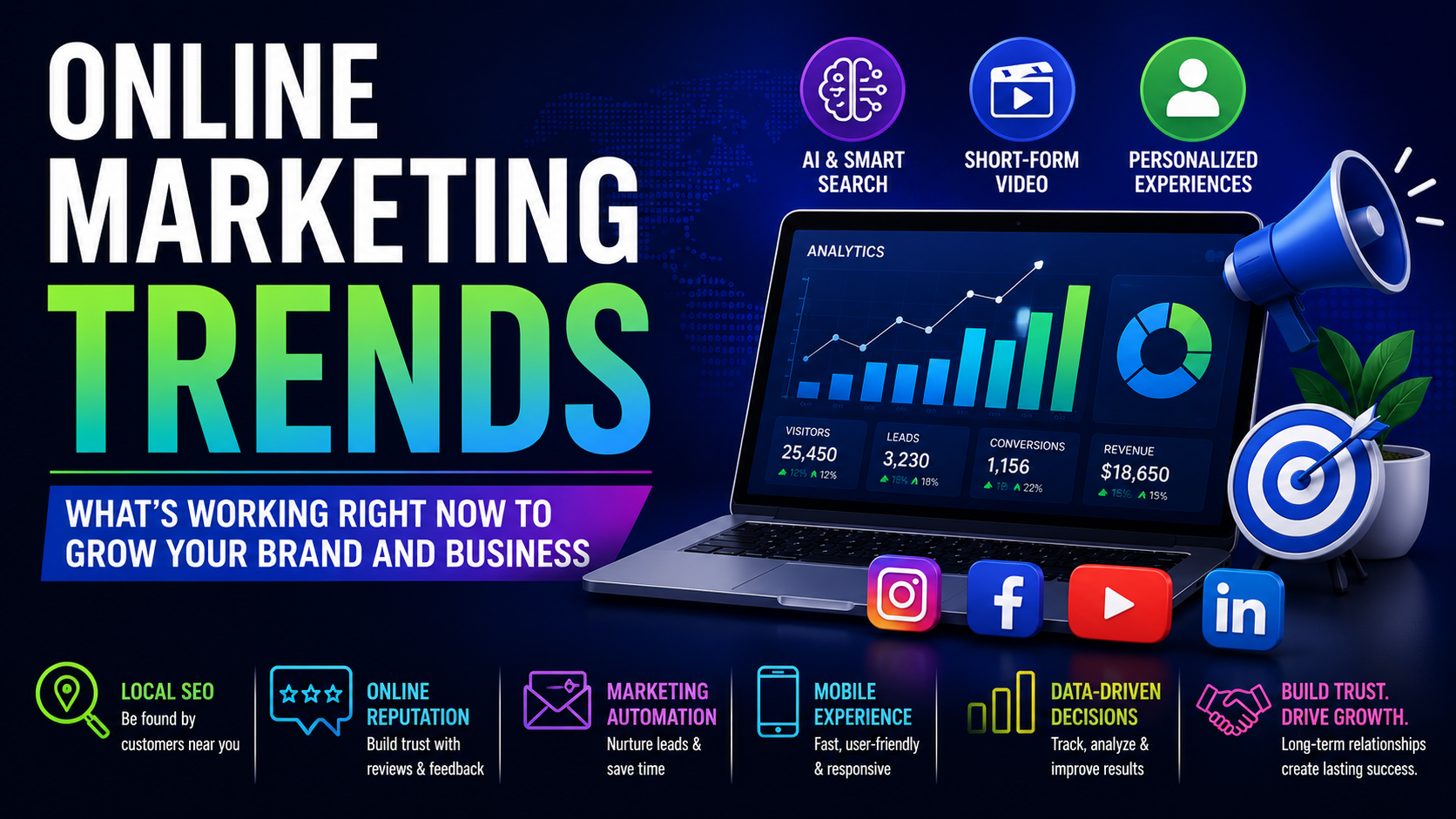
Steve: A couple of trends in digital marketing are really making waves lately. First off, AI and machine learning are total game changers, seriously shaking things up. They streamline and sharpen our marketing tactics like never before. Picture chatbots that tackle customer queries or smart algorithms tailoring content for each user. It boils down to being slick and personal at the same time.

Video content is another biggie. It’s pretty much everywhere you look, and there’s a good reason for that. Folks just can’t get enough of video. It catches the eye, delivers your message fast, and tends to stick in people’s minds. From quick social media snippets to longer explorations, video is a must-have in your marketing toolkit.

Let’s not skip over mobile optimization. With everyone glued to their smartphones for browsing, shopping, or just hanging out online, if your marketing isn’t mobile-friendly, you’re definitely losing out. It’s more than making things look good on a tiny screen; it’s about nailing that smooth, speedy user experience.

These trends are far from fleeting—they’re carving out the path for future engagement with our audiences.

Q: Where do you see digital marketing heading in the next five years?

Steve: The road ahead for digital marketing is packed with excitement. Augmented reality (AR) and virtual reality (VR) are about to change the game. Imagine popping on a pair of glasses virtually before buying them or strolling through your future home via VR. These tech wonders are gearing up to revolutionize brand engagement.

AI’s role in marketing is only going to get beefier, making custom-tailored marketing sharper than ever. It’s quickly becoming a wizard at figuring out customer desires, often before they even hit the search button. This means our marketing tactics can become more sniper-like in their precision, hitting the mark every time.

On another note, green marketing and ethical practices are no longer just buzzwords; they’re becoming the heart of brand strategies. Shoppers are gravitating towards brands that mirror their personal ethics, pushing companies to adopt more transparent and sustainable practices.

All in all, digital marketing’s future is looking more immersive, smarter, and ethically driven. It’s shaping up to be an epic journey.

Q: How do you anticipate emerging technologies will shape digital marketing strategies?

Steve: The landscape of digital marketing is getting a serious makeover thanks to new tech. Let’s talk about blockchain first. Gone are the days when it was just a buzzword for the crypto crowd. Now, it’s paving the way for greater trust and privacy online by making every transaction crystal clear. Picture being able to check out where your coffee beans came from, all verified on the blockchain. That’s a transparency game-changer.

And oh, 5G? It’s a game changer for speed and staying connected. This means everything in mobile marketing is about to get a whole lot zippier. Think quicker downloads, buttery smooth video plays, and never having to curse at a buffering icon again. This opens up a world of possibilities for richer, more interactive mobile ads and content.

Don’t forget about the new kids on the block – the up-and-coming social media platforms. Every so often, a new one pops up, shaking things up with cool, new features we all suddenly can’t live without. Marketers have to be on their toes, ready to dive into these fresh platforms to connect with audiences in ways we haven’t even dreamed of yet.

Stuff like blockchain, 5G, and the newest social media crazes are set to inject more honesty, speed, and fun into digital marketing. The trick is to keep your eyes peeled and leverage these techs before everyone else does.

Q: What advice would you give to businesses looking to adapt their marketing strategies for the digital age?

Steve: For businesses eager to keep up in the digital game, flexibility is your best friend. The online landscape shifts quicker than you can blink, and yesterday’s winning tactics might be today’s old news. So, always be learning. Staying clued in on the latest digital buzz helps you stay ahead of the curve.

Really getting to grips with your customer data is also a must. It’s not enough to just hoard numbers and stats; you’ve got to decode what they mean. Figure out what makes your customers tick and what they’re really after. This knowledge is gold for shaping your marketing moves.

And don’t be scared to play with new tech. Jumping on the innovation bandwagon can seriously up your game in connecting with folks. Whether it’s diving into AI to dish out custom recommendations or using AR for cool, interactive product views, tech can seriously spice up the customer journey.

Put simply, keep your eyes open, be eager to switch gears, and never stop looking for smarter ways to meet and greet your audience.

Q: How can companies stay ahead in the increasingly competitive digital landscape?

Steve: To keep winning in the digital arena, a strong online presence is a must. Think of it as your virtual handshake; it’s got to be warm and inviting. A sharp-looking website, buzzing social media channels, and maybe a blog that draws people in are key.

Content marketing is your next big play. It’s less about pushing products and more about sharing wisdom. Become the expert everyone turns to in your niche. This not only earns trust but also carves out your unique spot in the market.

Engaging with your community through social media and other digital platforms is crucial, too. Don’t just shout into the void; listen and interact. Answer questions, spark discussions, and be a genuine part of the conversation. It proves you’re more than a logo; you’re a living, breathing part of the community.

In a nutshell: Make sure you’re seen, share your smarts, and really connect with folks. That’s your ticket to staying ahead in the ever-evolving digital landscape.

Q: From your experience, what have been the biggest challenges in navigating digital marketing trends?

Steve: Tackling the digital marketing world is full of twists and turns. One major challenge? Keeping pace with relentless tech updates. It feels like there’s a new gadget or platform popping up every minute. Keeping your strategy fresh means always being ready to embrace the latest tech without skipping a beat.

Then, there’s the ever-changing online behavior of folks. Tactics that were all the rage a few months ago might not even get a second look now. It’s like aiming for a target that’s always on the move. You have to stay sharp, ready to adjust your strategies based on the newest buzz and direct feedback.

Protecting your brand’s reputation online is another biggie. In the digital world, your brand’s image can take a hit or soar with just one post. Striking the right balance between trying out new ideas and holding onto your core values is essential. It’s all about daring to be different, yet not losing the essence of what your brand stands for.

It’s a balancing act—staying up-to-date, responsive, and authentic. Facing these challenges is what makes navigating digital marketing such an adventure.

Q: Any final thoughts or advice for aspiring digital marketers?

Steve: Jumping into digital marketing? Brace yourself for a never-ending learning curve. The scene’s always shifting, and to stay in the game, you’ve got to be a perpetual student. Stay curious. Tackle new tech head-on, even when it seems a bit scary. You might stumble across something that completely transforms your approach.

Building your network and finding mentors are key moves. Rub elbows with fellow digital marketers. Swap stories, pick up tips, and soak in as much wisdom as you can. A good mentor can be a goldmine of advice and insights, giving you an edge. Plus, the digital marketing world is brimming with folks who are nothing short of inspirational.

So, keep your mind open, keep peppering questions, and dive into the community vibe. These steps aren’t just about polishing your skills; they’re about making the whole journey more rewarding.

Customer Reviews are the Future of Marketing

Everyone knows that customer feedback is important to gather but what some business owners don’t know is how that information should be displayed or that past customers can be one of the most important marketing tools that you’re not utilizing. 

GBX Digital and Verified Reviews can help your business to collect and display reviews and our powerful platform can help you moderate reviews so you don’t get immediately saddled with a negative review. 

We start by following up with your customers after they make an online or instore purchase. Our collection emails and text messages can be personalized, branded and customized in almost any way you want. The emails collect brand and product reviews with both star ratings and short answer questions in a single email increasing your response rate. 

Once reviews are collected, we can post high rated reviews or alert you to low rated reviews so you have an opportunity to reach out to the reviewer before the review is posted. These reviews can be posted to your website, social media and thanks to our partnership, in the most popular search engines, increasing your Search Engine Optimization or SEO. A benefit of our Google partnership allows us to display star reviews under your products which is more compelling for the buyer. You can see an example of that below with our customer Kusmi Tea. 

In addition to SEO, your Search Engine Advertisement or SEA can be increased by adding your star rating below your add on a search engine, which you can see an example of below with our customer Chairish.

What many businesses don’t realize is that customer reviews can work for you and they will speak louder than any marketing plan you could create. Reviews can reassure potential customers of your brand and product’s value, quality, and transparency with your consumers. 

Since the COVID-19 crisis, customer review readings have increased by 45% and it is imperative to capitalize on this trend that probably isn’t going away anytime soon.

With online shopping increasing, making sure that your customer reviews are easily accessible should be the first item on your ‘to-do’ list. The first step is to have your reviews available on your website, your social media accounts or indexed in a search engine. It is important to have your most recent reviews in a prominent location because according to a recent Capterra study, 35% of consumers have more confidence in a review left less than 3 months ago.

Once you have all of your reviews complied, it’s time to evaluate the percentage of positive reviews to negative reviews. Obviously positive reviews are the most sought after because they help convey the quality of your brand and products to your prospective customers. Something that many business owners forget is that a positive review says more about your brand than you could convey in any marketing campaign. Turn your happy customers in brand ambassadors for prospects to marvel at.

While negative reviews aren’t fun to read, it’s important to react and learn from them. Negative reviews should be addressed within 24 hours because whoever left the poor review clearly isn’t happy with the service they received. If you have a partner that can help you identify and respond to negative reviews before they are made public, you can mitigate this situation before it happens.

It’s important to have a reliable partner to help you collect and manage reviews to build your brand. If you are reading this and are thinking that you simply can’t manage this all on your own, contact GBX Digital and we can help you out. We’ll even set you up with a free trial with so you can harness the power of customer reviews!

Protecting Against the Threat of Ransomware

Ransomware

2019 saw a rapid rise in ransomware incidents that have taken down institutions from different industries both in the public and private sector the world over.

Three major web hosting firms have fallen prey to ransomware. In September, Politico.com reported that a wave of ransomware attacks have infected at least 80 state and local government agencies in the United States. Meanwhile, schools have also fallen to this insidious assault, with a study made by cloud security vendor Armor placing the attacks for the first nine of months of the year at about 500 K-12 schools. 

As technology progresses and we move further into a world of interconnectivity through the Internet of Things and the launch of 5G, the more vulnerable we will become to such attacks. Statistics show that a new organization will fall victim to ransomware every 14 seconds in 2019, and every 11 seconds by 2021, according to Cyber Security Ventures.

An IBM study suggested that over 25% of all companies would shell out over $20,000 to hackers to retrieve stolen data, that is 1 out of 4. According to a Reuters report, the NotPetya ransomware attack cost FedEx $300 million in the first quarter of 2017. Business Insider placed the revenue generated by hackers through ransomware at over $25 million each year. 

It doesn’t look like it’s going to stop any time soon. Recent studies have shown that ransomware attacks are increasing more than 300% year over year, according to dimensiondata.com. 

The government has taken notice of the threat. The US Senate has passed the Department of Homeland Security (DHS) Cyber Hunt and Incident Response Teams Act. The bill empowers the DHS to maintain teams that would aid both the government and private sectors when dealing with cyberattacks, both as a measure of prevention and as a response team in case of an incident. 

Ransomware is now an indelible fact, so before you find yourself in the crosshairs of an attack, remember to ACT. 

Alleviate the Threat – Don’t think you’re immune to the threat. Have a plan in place for when you find yourself the victim of an attack. It’s easier to keep a cool head and take the necessary steps if you have a strategy in place. Test it. Don’t skimp on protection. Invest in industry experts and allow them to help you set up a parameter that protects your system and a protocol that lays out what to do to mitigate the damage you will take in case you fall prey to ransomware. 

Comprehension Is Key – Understand your system and the flow of data. Are there vulnerabilities that can be exploited by outside parties? What areas need to be bolstered? Take the time to learn what ransomware is, how it operates and what it does. When you understand the threat, the better you will be able to protect against it. 

Teach – A company is only as strong as its weakest link. Make sure that everyone that has access to the system understands the threat of ransomware and the security protocols set in place to protect against it. Knowledge is power. Make sure that everyone in the business is on the same page when it comes to system protection. By empowering your employees, you empower yourself. 

Website Development: Incorporating Art in Web Design

In website design, and in managing any digital marketing platform, the goal of a business should be to offer something original and distinct to their target market. One way to achieve this is by being deliberate in incorporating art in website development.

Here are some artistic ideas to consider when designing a company website:

Go for bold color combinations. These days, minimalism is all the rage when it comes to site design, and it features neutral colors and minimal use of design elements. A minimalist website does look very modern and on trend, but a company adopting this aesthetic also faces the risk of looking just like every other site out there. To stand out, businesses may want to consider opting for bold combinations, featuring bright colors that will surely leave an impression on every page visitor. Canary yellow and emerald green, or bright pink and aqua perhaps? As long as they do go well together and facilitate readability, the resulting look will work, and even better, be memorable.

Unique photos. Purchasing stock photos to put on one’s website can be a very tempting idea, especially for businesses with limited resources for photoshoots. However, original photos – of products, of company activities, and of the lifestyle being sold by the business – can send very powerful messages regarding the company. It shows that it cares about its image, wants to be perceived as professional, and has access to the right talent. The key here is to style photos according to the brand’s preferred visual aesthetic, in locations that can be readily associated with the business, then post-process with a filter that can be established as the company’s trademark look.

Sketches and paintings. The banner, the clickable icons and buttons on the menu, and the page background can all feature unique sketches and paintings by commissioned artists. Instead of using such phrases as “Our People,” or “Contact Us,” for example, the website can feature a very hip line art of a group of people, or a mobile phone, respectively. And instead of downloading the logos of the top social networking sites (Facebook, Twitter, Instagram, and Pinterest, among others) for the social sharing dashboard, a hand-drawn image can be displayed.

Video and animation. Moving images are also a refreshing addition that will make a website stand out. Again, the key is to produce original material for the brand – the kind that’s crafted around the company’s marketing message and its target market, but is short and crisp. Videos and animations can be used as a featured material, or as background that adds drama to the page.

To create an artful, fresh-looking website, it is important to partner with a team of professionals who possess the training and experience in visual communications and graphic design, as well as the technical skills needed for website development. GBX Digital of New York maintains such a team, and they have since helped countless businesses conquer the digital landscape through unique and powerful marketing materials. Visit GBXDigital.com today to learn more.

Website Development: Improving Your Web Portal

If you plan on conquering the digital space, you should be ready to create a fool-proof, systematic program for the design and development of your web portal. Here are some important steps to take when improving your site:

Know your baseline. To know what direction to head towards, you must know first where you are. If you have yet to use any tool for gathering performance measures, it is time to acquire one now. Among the statistics you should have on hand are the daily traffic to your company website, the average amount of time users spend on it, the pages that draw the most and least traffic, and the pages that are able to keep visitors the longest. These details will give you rich insights regarding the kind of content that’s relevant to your target market, and which page design practices work for your business.

Check out the competition. Identify your best competitors – or those that provide the same products or services as you do, and also cater to your target market. You must ensure that your website is very distinct from any of them, by going for original design templates, layout, color schemes, and content. Know also what materials and promotions they are publishing, and the reception that these are getting. When you understand what you are up against, you would know how to develop your own offerings.

Evaluate your resources. Website development would obviously be just one of many marketing efforts that you need to launch. It is important to evaluate the resources that you can allocate for this endeavor, in terms of budget, manpower, and facilities and equipment, among others. Do you have the funds, the technology and the skills to perform the task in-house? Or would outsourcing be a better option?

Determine your goals. What are your overall marketing goals and how will improving your website help achieve these? And for website development in particular, what are your new targets for site traffic, click-throughs, and lead conversion? Depending on your baseline, your parameter for success may or may not be directly linked to sales. For example, if you are still in your early years as a business, your goal right now might simply to be able to create an email database to whom you can send emails containing your special offers. To accomplish this, your new site design may incorporate pop-up windows that ask people to enter their email addresses. If you are an established company, you might already have a following that simply need to be coaxed to make regular online purchases, in which case you need to monitor which of your products are being viewed by the same visitors on a regular basis, and conceptualize a promotion accordingly.

Get in touch with GBX Digital today to learn more about website development. GBX Digital is a New York-based agency that specializes in crafting corporate identity and marketing materials, and conducting internet reputation management and digital marketing campaigns – from search engine optimization, to social media marketing.

Corporate Brand Development: The 3 Essential Questions to Ask

Corporate brand development is a critical task that any new organization needs to conquer. As this stage will greatly determine the direction of marketing campaigns, networking efforts, and organizational development, a significant amount of efforts and resources must go towards solid conceptualization.

Here, we discuss the three fundamental questions that a business must ask itself, to be able to come up with a cohesive, effective, and appealing corporate brand.

What do you do? In introducing oneself, the very first information to present would be what one does. Is it offering a service, or a product, or both? In a sentence, how would such an offering be described? This description essentially puts the organization in a category, in the industry it belongs to. It is, however, important to distinguish the corporate brand, which concerns how the organization presents itself, from the branding of its products or services. While these would be related, corporate branding should be about the organization and its capability and competence.

Who is your target market? To whom does the company intend to present its offerings? The target market is typically described in terms of their demographic: age, gender, socio-economic status, educational attainment. Sellers of luxury goods such as designer leather handbags, for example, would be targeting high-income, adult men and women. Other useful categories would be their location, hobbies and interests, political affiliation, and religious affiliation. Sometimes, too, in the course of clarifying one’s target market, it is also useful to articulate subsets that the brand does not wish to sell to.

What sets you apart from the competition? In marketing parlance, the answer to this question would constitute the value proposition, or that statement that explains why the customer should choose the company’s offerings, over the many other options available in the market. Value proposition statements usually make a reference to the product’s high quality, the brand’s prestige, the company’s exceptional customer service, the reasonable cost of their offerings, or the accessibility of their stores. And the best brands are those that can boast of having all of these features. But it is also perfectly fine to highlight only one of these features, if that is the company’s selling point, and what it is proudest of.

If a company is able to devote sufficient attention to its brand development, the result would be easy to see. Its marketing materials would look consistent, and readily draw the attention of the target consumers. The copywriters and its brand ambassadors, as well as its prospective marketing partners in the industry would also have a quick reference. In short, the business is set to greatly benefit from thoughtful corporate brand development.

To learn more about brand development, get in touch with the experts at GBX Digital, a world-class digital marketing agency based in New York.GBX Digital understands that every organization has a message that it must be able to convey through branding, and they know just how to get it through. Call them today or visit GBXDigital.com today, for more information.

Tips for Facebook Page Management

Since its inception in 2004, Facebook has without a doubt changed the world. And it is poised to continue doing so, with 2 billion – and counting – monthly active users from across the globe as of this writing. Not surprisingly, businesses keen on reaching this population have built their presence on this top social media website.

But not all of them may be reaping the investments of precious time and effort. Below are some useful tips for brands that hope to create and grow their communities on Facebook.

Set goals. First, the business must know what it seeks to achieve on Facebook. These can be outlined in a strategy document, which should also feature guidelines regarding the form and content of posts. It is important to determine the baseline figures: the number of followers, the average likes and shares of posts, the distribution of the activity based on gender, age, and location, among others. They can establish their goals regarding their following, user engagement, and post frequency and quality, as shown in the improvement of these stats. Other possible goals include increased product inquiries via private message, inquiries for brand partnerships, or more perfect 5 customer reviews.

Delegate the management tasks wisely. Businesses new to digital marketing may become too enthusiastic about their company’s Facebook presence, and end up having everyone wanting to have a say on how the page should look like, and what should be on it. However, it has been proven time and again that too many cooks spoil the broth, and with dispersed accountability – with everybody, including the CEO, added as an admin –no one would feel obliged to focus on page management. Posts by different people might also bear different tones, styles, and messages, affecting how the brand is perceived by its followers. A good approach would be to assign a maximum of two people as administrators, while welcoming content suggestions and contributions from an extended pool of people, and approving them based on the overall guidelines.

Develop good page materials. Appearance matters highly on Facebook, so brands need to invest in good introductory materials – profile photo, cover photo, and the blurbs for the “About” section. Pictures must be in the right specs, so that they will load properly on whatever device, on whatever operating system. All blanks should be filled up, otherwise the page will look unprofessional.

Use Facebook to promote the other brand platforms. Connecting with customers via Facebook is a good goal in itself, but it is even better if the platform is used to boost traffic to other digital marketing assets owned by the brand. This might entail linking to the company’s tweets, or posts on Instagram, or responding to inquiries with an automated reply that lead to the company’s email database for the user to fill. Indeed, brands should grab every opportunity to build alternate connections – because a Facebook follow is as tenuous as can be, with just a mistaken double-click causing one to unsubscribe.

Learn more about managing online communities by getting in touch with GreyBox Creative.

Social Media and Marketing: Factors to Consider When Using Social Logins for Websites

These days, social media platforms continue to enjoy active engagement among billions of users across the globe, making it beneficial for companies to integrate them with their other digital marketing efforts.

Many company websites now include buttons leading to the company’s social media accounts, while their content would present options for sharing via Facebook, Twitter, Pinterest, or Instagram, among other portals. The credentials for one’s social media accounts can now also be used to enter e-commerce platforms, an alternative to remembering every site-specific account username and the corresponding password. This is a particularly useful feature for those who do not want to enter login details all the time for websites they frequently visit.

But there are important implications when it is used on a company page. This article tackles the factors to consider when installing social logins:

Worry over user data privacy. Digital marketing efforts must follow the highest standards when it comes to respecting the privacy of the customer data. But when they enter through social media, the social media platform’s own privacy settings might dictate the terms of the usage of their information. Businesses usually like this because social media is a great resource regarding consumer preferences. But this possibility must be spelled out to customers, so that they know what they are getting into when they log in with their Facebook account, for example.

Possibility of being flooded with advertisements. An offshoot of the possibility that social media websites will mine customer data would be the emergence of advertisements based on the websites they have visited. It is, for example, highly likely that a woman who used social login to check out the selection of dresses in an online boutique will be the target of a clothing store’s Facebook ad. While it is true that the same will happen if they performed a regular search for a product on Google, there may be heightened alarm for users when it involves their social media accounts, which is often a repository of a lot of personal information.

Perception of inaccessibility. It is also possible for a potential page visitor to be turned off when only a social login window appears as they try to enter a site. After all, it might be perceived as a delay or as a form of inaccessibility, and with no clear benefit, too. Indeed, it might not always be evident that they can see more by parting with their social media credentials.

Managing expectations is key. Different users have different reactions to the aforementioned concerns regarding privacy, advertising, or inaccessibility if they use social login, but key to ensuring their cooperation and continued engagement is managing their expectations. There should be a clear explanation of how it benefits them, how it poses no serious harm, and what information will be culled from their account.

Talk to GBX Digital today, to learn more about the use of social media in digital marketing. GBX Digital is a team of experienced digital marketing professionals based in New York.

Insuring your Name: A Reputation Management Guide for Insurance Professionals

Managing risks, protecting against losses. These are tasks the insurance profession are supposed to do better than the average Joe. And there is perhaps no better opportunity to demonstrate this expertise than when facing the threats that mark the age of digital marketing.

In this age, we are introduced to tools that offer unparalleled speed, convenience, affordability, and reach in promoting our organizations. However, the very same tools render us vulnerable to various forms of interruption. For example, while social media made it significantly faster and cheaper for us to communicate with our target market, a viral complaint in one social networking website could also easily ruin your business.

How do we insure our good company name in a world where an unsatisfied customer can readily publish a bad review online and influence the perception of a million users? This article discusses timely reputation management tips for today’s breed of insurance professionals:

Listening in the digital world

To be able to defend one’s brand, a company must first learn how to listen to conversations in the digital world. What are the common problems and sentiments raised by consumers in financial forums or social media? What are the most Googled questions about finance or insurance? What developments in the insurance industry are capturing their attention?

Listening means digging deep into the interests of all stakeholders, and putting oneself in their shoes. For instance, a young professional looking to buy his first insurance plan would have all kinds of questions in search of the best policy in terms of costs, coverage, and/or payment terms. Listening would involve going to the channels where such questions are raised, and where concerns are shared.

According to McKinsey & Company, consumers go through a multi-step journey when evaluating and experiencing products and services. The trick, then, is to perform the necessary monitoring and respond right away.[1]

Effective monitoring begins with establishing a solid online presence where one’s target customers are: social networking sites, forums on finance, review websites, and question-and-answer websites. Official accounts bearing the company’s official logo and other corporate identity elements should be created on all these platforms, to be managed by well-trained community managers. Guided by the company’s corporate communication guidelines, a community manager should provide potential customers with informative content, or gently guide misguided critics toward reliable information.

This practice of tracking conversations around particular words, phrases, or brands, and then utilizing them to discover and create opportunities is called social listening. It goes beyond counting the notifications and measuring reach and engagement;it also uncovers the deeper meaning behind each reaction, and identifies customer pain points and complaints.

Tools for listening

Nowadays, Google Alerts and Analytics may be the most popular tools for monitoring a brand’s online performance. Users simply need to enter the keywords related to their services, and they gain access to a whole range of useful data for brand and product or service development.

But there are many other tools that can be utilized for social listening. In Social Mention, users can type in the name of the insurance company, and results can be sorted by time frame or source. The application can also show how often a brand is being discussed, and identify the top online influencers participating in the conversation.

Another popular brand conversation monitor is Hootsuite, a page where users can craft a stream through a particular keyword. Because this tool is designed to be a one-stop dashboard for managing Facebook, Twitter, LinkedIn, Foursquare, Google+, WordPress, and other social media networks, it can obtain and analyze data from all these platforms.

Other social listening tools available for today’s businesses include Twazzup, HowSociable, Klout, Buzzsumo, and TweetReach. All these enhance the capacity of digital marketing managers to build brands, especially by engaging wider audiences for their content. The word cloud daily update, for instance, allows the religious tracking of trending topics for each day:[2]

Joining conversations

Another benefit of social listening tools is the opportunity to join conversations that may be related to the company. For those in the insurance industry, alerts may be set up for relevant keywords corresponding to our respective product and service offerings.

When community managers contribute to discussions or respond to queries around these keywords, the brand will be perceived as one that brings value to conversations more than simply promoting itself. A good example of this kind of exchange involves NightCapApp, as cited on Sprout Social[3]: Here, we see two users engaging with each other:

Upon seeing the conversation, the brand hopped in, not just with a cursory expression of gratitude, but with an informative reply:

Social Media Examiner argues that another way to find new business and participate in conversations is to monitor keywords related to people’s problems with a competitor’s service.

“Monitor terms like “[competitor’s brand name] can’t” or “[competitor’s brand name] won’t” to identify pain points,” their article recommends. Once these customers have been identified, reach out to them but do not oversell.[4] Make your response informative –perhaps redirect them to your website with an educational, rather than a promotional, material.

With insights drawn from social listening, the digital marketing managers are now equipped for the next step: Knowing when a negative review comes up, and responding promptly.

Combating bad online reviews

Effective reputation management begins with the astute discernment regarding the nature of and motives behind a review. As we in the insurance industry know too well, resources are limited and valuable, so we should learn to allocate them wisely and choose our battles.

Community managers should determine whether a review merits a response by asking the following questions: Is it based on an actual experience? Does it have the voice of a frustrated customer, or is it merely a malicious comment from a troll? How was the complaint worded? What aspect of the business is the subject of the concern? Is it about a new insurance product you launched, the behavior of the staff, or the company’s pricing or sales practices? Is it something that will reflect greatly on the brand, or could it be explained away as an isolated incident or inconsequential issue? Was it posted on a credible space? What reach does said space have? Will a response make a difference?

There are no hard and fast rules, and each case must be dealt with based on its context. Sometimes, a swift response is needed so that the company gains control of the conversation, lest the accusation takes a life of its own, stoked further by competitors or the personal network of the disgruntled client. Other times, a response can blow things out of proportion, or simply not satisfy anyone. Sometimes, too, a company might not want to dignify criticisms that are untruthful, or were lodged by people whose opinions might not have bearing within their own networks.

Should a community manager decide to respond, these general principles of reputation management should be observed.

Set your targets.

Know what you seek to achieve. The best scenario would be a combination of the following: The complainant gets in touch with you directly, in private; the review is deleted or buried; your company communicates its side of the story; and a public resolution transpires. Setting targets will allow your community managers to be systematic, efficient, and precise in their course of action.

Adopt the correct attitude.

A bad review – one that has been vetted as based on facts and coming from a living, breathing human – can be constructive criticism. Be thankful, because negative feedback informs you of the weak points in your organization and your procedures, and gives you the chance to improve them accordingly. Such information, while generally undesired, is what will help your company learn and grow from mistakes. This kind of attitude towards criticism will inspire a more compassionate and problem-oriented approach – one that does not blame the victim, and addresses the issue swiftly.

Be prompt, sincere, and respectful.

Regardless of whether your organization is the one at fault, do acknowledge the customer’s feelings, and apologize for the unpleasant experience. Ask how you can make amends, and get their input on how to improve your services. Explain what happened clearly but briefly, without sounding defensive but not putting your organization in bad light, too. Most importantly, reassure them that they will not go through the same experience again.

Amplify positive content.

In order to bury negative content, you need positive ones to replace them. Encourage the creation of good reviews: Incentivize the practice of giving your organization positive ratings, and publishing happy stories about it online. Compose articles around good news involving your company, such as recent awards and citations from the industry, new executives and talents coming in, better practices being adopted, as well as your corporate social responsibility efforts. Send these materials to as many online publications and platforms as possible.

Find and create more spaces for your content.

Conduct an audit of where you can publish your content right now, and seek to create more of these spaces. Most insurance companies would have a website, but not a well-maintained blog. There is no stopping you from developing more microsites for more specific topics (auto insurance, surety bonds, health insurance), for particular demographics(millennials, pensioners), or for each of your top executives. Regular updates will boost the SEO rankings of your company-owned pages, bumping up their position on search engine results, and burying the negatives.

Forge good relationships.

Build and strengthen relationships with members of the press, industry watchers, consumer advocates, influencers, and bloggers covering the world of insurance. Every relationship offers a chance for a collaboration, for learning about effective marketing and publishing practices, or for accessing a platform to amplify one’s message. Community managers should be able to reach out to these parties, and establish media partnerships and sponsorships. For example, the insurance company can lend its talents to a video production or a podcast to be published on a blog on insurance.

Taming the beast

Reputation management in this era may be a new beast for many in the insurance industry. The rules of the game change constantly, and new tools are being conceived each day. Google is known to update its algorithms regularly, for example, today’s top online monitoring app may be obsolete by next quarter. Bots can spread the negativity about a brand quickly, and pages can be unpublished upon demand by an army of fake accounts.

But when an organization is armed with the right mindset, the best talent, and the willingness to adapt to change, all these challenges can be overcome. Reputation management is a beast that we will be able to conquer, with aplomb.

[1] “10 Tips: Tap Consumer Sentiment on Social Networks.”Information Week. Web. http://www.informationweek.com/software/information-management/10-tips-tap-consumer-sentiment-on-social-networks/d/d-id/1105234?

2“Improving Social Media Strategy: Learning from 10 Leading Insurance Brand.” TalkWalker. Web. https://www.talkwalker.com/blog/improving-social-media-strategy-insurance-brands.

3“What Is Social Listening & Why Is It Important?” SproutSocial. Web. http://sproutsocial.com/insights/social-listening/.

[4] “8 Ways to Use Social Listening for Your Business.” Social Media Examiner. Web. http://www.socialmediaexaminer.com/8-ways-to-use-social-listening-for-your-business/

Coke Removes CMO Role: What it Means for the Digital Marketing Landscape (Part 2)

With the developments over at the Coca-Cola headquarters, the marketing world is abuzz with discussions on how a move to do away with a CMO by a global giant will impact on the industry. As argued in the previous blog, this news is supposed to reflect the realities that business organizations big and small must grapple with, in the modern era of marketing.

Here are some of these realities:

The duties of a CMO remain. The position might have been removed, but in every organization, the duties of a CMO remain. Someone has to take the lead in articulating the marketing vision, developing programs for building the company profile, guiding research initiatives for understanding the target market, and overseeing the development and execution of strategies to adopt for all marketing channels. In Coca-Cola, they dissolved the CMO position and the duties were reassigned to a Chief Growth Officer, who will then be reporting directly to new CEO James Quincey. As this CGO determines Coke’s growth framework and strategies, he will surely still have to perform marketing activities, because all the new products and markets discovered will require conveying the brand message effectively.

Metrics are important. The issue of ensuring ROI from digital spend emerged as a key aspect of the shakeup. For today’s marketers, this shows the importance of adopting state-of-the-art solutions to accurately measure the performance of digital marketing campaigns. Performance metrics are needed to show the strong and weak points of the marketing strategy, and to guide the budgeting plan. A smart organization is scientific and evidence-based in spending every marketing dollar: investments are allocated only towards worthy activities and products. For Coke, this might mean focusing efforts away from the soda line and towards its “healthier” beverages, if that is what customer behaviour patterns reveal.

Organizations must rethink their budget framework. For new channels like digital, it is but normal for any organization to not generate ROI immediately. At first, there would be a need to make considerable investments in learning the ropes of a marketing domain, establishing contacts, acquiring talent, training people, and procuring technologies. With this mindset, expectations will be realistic, and accomplishments and failures can be recognized at once for what they are.

Honed by decades of combined experience in marketing, our team of experts at GreyBox Creative understand the challenges of marketing in this era. Call us today to know how we can help your organization conquer the digital marketing domain.